
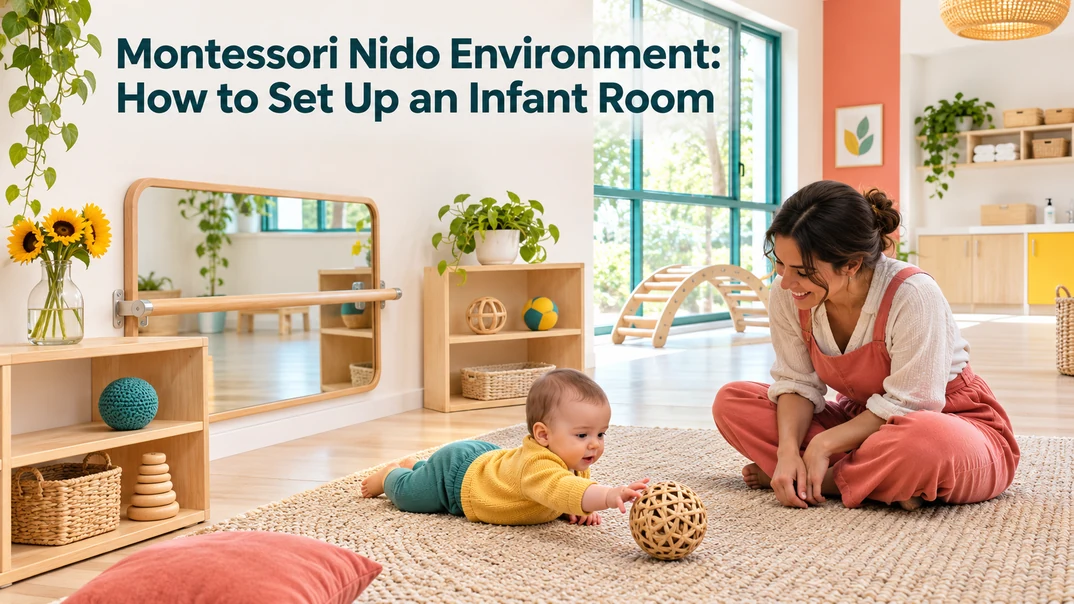
A Montessori Nido environment gives infants room to move, explore, and receive attentive care. If you are planning an infant room, the layout, furniture, daily routines, and sleep arrangements need to work together. This guide helps you plan the space, choose suitable furniture and materials, and check important safety requirements before making purchasing decisions.
What Is a Montessori Nido Environment?
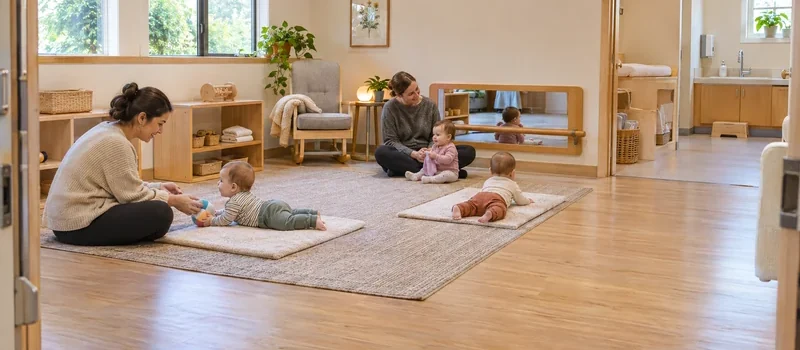
A Montessori Nido environment is a specially prepared space for infants, typically from birth to around 15–18 months, before they become independent walkers. The word Nido means “nest” in Italian, reflecting the warm, secure atmosphere this environment aims to create. It is designed around infants’ developmental needs, giving them opportunities to move freely, explore their surroundings, and gradually develop new abilities while receiving attentive care from adults.
Unlike a traditional infant room that focuses mainly on feeding, sleeping, and diaper changes, a Montessori Nido also considers how the environment supports early development. Furniture is selected to suit infants’ physical abilities, materials are kept accessible, and different areas are arranged to support daily routines. The goal is to create a space where babies feel secure, caregivers can work comfortably, and everyday activities become opportunities for learning and discovery.
What Are the Key Principles of a Montessori Nido Environment?
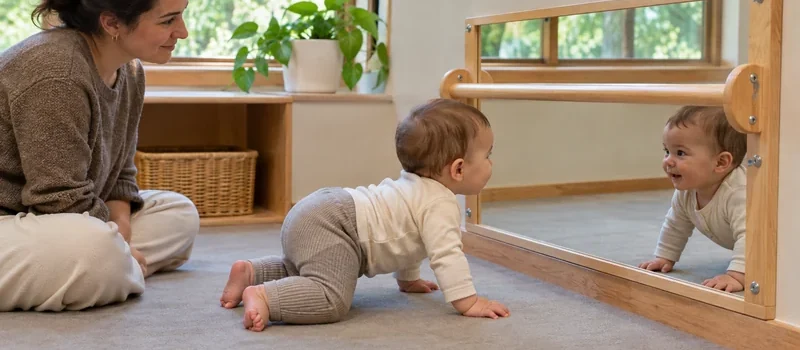
A Montessori Nido environment is built around how infants grow, move, and interact with the people and objects around them. These principles guide the decisions you make when preparing the room: how you respond to each baby, how you offer opportunities for movement, and how you adjust the environment as their abilities develop.
Prepared Environment
A prepared environment means arranging the room around infants’ daily needs and current abilities. Furniture should have a clear purpose, materials should be suitable for the age group, and everyday supplies should have designated storage. For example, you can place a low mirror near an awake movement area and keep a small selection of suitable materials in an organized place. The aim is to make the room predictable for caregivers and manageable for infants as they begin to explore.
Freedom of Movement
Infants develop physical skills through opportunities to move and explore. Your room should provide enough safe, open floor space for babies to roll, stretch, reach, crawl, and eventually practice standing. Giving infants regular opportunities for active movement and floor-based play helps them gradually develop coordination and body control. A comfortable floor surface and suitable materials can support these experiences, provided the area is arranged for supervised awake activity.
Respect for the Child
Respect begins with recognizing that every infant has different needs, preferences, and developmental rhythms. You should pay attention to their signals instead of expecting all babies to follow the same schedule. Even simple routines, such as feeding or diaper changing, can become opportunities for positive interaction. Talk to the baby, explain what you are doing, and give them time to respond through eye contact, gestures, or sounds.
Independence
In a Nido environment, independence does not mean expecting infants to manage daily activities on their own. It means giving them opportunities to participate according to their abilities. A younger baby may practice reaching for a nearby object, while an older infant may choose between two toys or explore a low shelf. Your role is to make these opportunities accessible without rushing the child’s progress.
Observation
Observation helps you understand how each infant uses the environment. Watch which materials attract their attention, how they move through the room, and whether they can reach or use items comfortably. If an area becomes crowded or a material no longer suits a baby’s abilities, adjust the arrangement. Use what you observe to make practical changes rather than adding equipment without a clear reason.
How Should You Plan a Montessori Nido Room Layout?
Planning a Montessori Nido room layout starts with understanding your space, the number and ages of infants, and their daily needs. Before choosing furniture, decide how sleeping, feeding, diapering, and movement areas can fit together while leaving clear routes for caregivers.
Consider Room Size, Capacity, and Infant Development
Start by measuring your available space and identifying how many infants you expect to accommodate. Room size affects how much space you can allocate to sleeping, feeding, movement, and other daily activities. You should also consider the age range of the infants because a room for younger babies has different needs from one used by infants who are already crawling or pulling themselves up.
Before planning the layout, consider:
- Room dimensions: Measure the usable floor area, including doors, windows, and existing fixtures.
- Enrollment capacity: Consider the number of infants and caregivers who will use the room at the same time.
- Developmental stages: Allow enough space for babies to roll, crawl, sit, and practice standing as their abilities develop.
- Daily care requirements: Account for feeding, diapering, sleeping, storage, and handwashing facilities.
- Local regulations: Check childcare licensing requirements for room capacity, required space, sleep arrangements, and safety.
These details help you estimate how much space each activity needs and identify layout problems before you purchase furniture.
Divide the Room into Functional Zones
Once you understand the room dimensions and daily requirements, divide the space into functional zones. You do not need separate rooms for every activity. Low shelves or changes in floor surfaces can help define areas while keeping the room open and allowing caregivers to maintain clear sightlines.
For a typical Montessori Nido, consider five main zones:
- Movement Area: An open space where infants can roll, crawl, reach, and explore.
- Sleeping Area: A quiet section with appropriate individual sleep spaces for infants.
- Feeding Area: A comfortable place for bottle feeding and age-appropriate meals.
- Diapering and Care Area: A practical area for diaper changes, hygiene, and daily care.
- Sensory Exploration Area: A space with carefully selected materials that encourage infants to explore different textures, shapes, and sounds.
The size of each zone should reflect the infants who will use it. A group with mostly non-mobile babies may need more space for sleep and supervised floor time, while a group with older, mobile infants may need a larger, unobstructed movement area. If the room serves different developmental stages, make sure one group’s activity does not block another group’s access or supervision.
Create Safe and Accessible Movement Paths
After defining the different zones, think about how caregivers and infants will move around the room. Keep pathways clear so caregivers can carry babies, access supplies, and respond quickly when needed. Avoid placing large furniture where it blocks visibility or makes it difficult to reach another area.
Pay particular attention to the relationship between activity areas. For example, the diapering station should be easy for caregivers to access without disrupting the sleeping area. Storage should be convenient for adults while remaining safe and inaccessible to infants where necessary.
It is also worth checking your furniture arrangement from a caregiver’s perspective. Can you supervise the movement area while another infant is feeding? Can you reach essential supplies without leaving other babies unattended? Thinking through these everyday situations will help you create a layout that works in practice, not just on paper.
What Should Each Area in a Montessori Nido Environment Include?
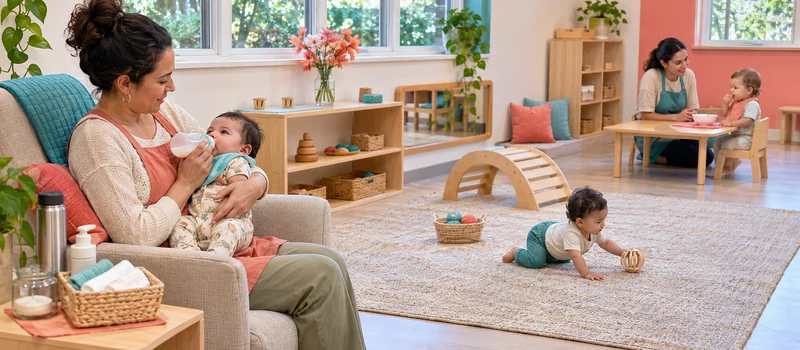
Each area should have a clear purpose and suit the routines that take place there. Think about what caregivers need to do, what infants can safely access, and how the area will be cleaned and reset. Choose the furniture and materials only after these needs are clear.
Movement Area: Encourage Natural Movement and Exploration
Give babies a cleanable, stable floor surface with room to lie, reach, roll, and crawl. Keep nearby shelving low and secure, and place only materials suitable for infants who can reach them. Check that mirrors and any movement supports are designed for the intended use and securely installed. A mat used for supervised awake activity is not automatically a safe sleep surface. Keep the area clear of door swings, unsecured cords, and busy supply routes.
The movement area will need to change as infants grow. A space that works for a baby who is not yet mobile may become a crawl path later, and a low shelf may become something an older infant tries to pull up on. Recheck furniture anchoring, loose objects, and caregiver sightlines as the group’s abilities change. Before adding movement equipment, check its age guidance, installation requirements, and required clear space.
Sleeping Area: Prioritize Comfort and Safe Sleep
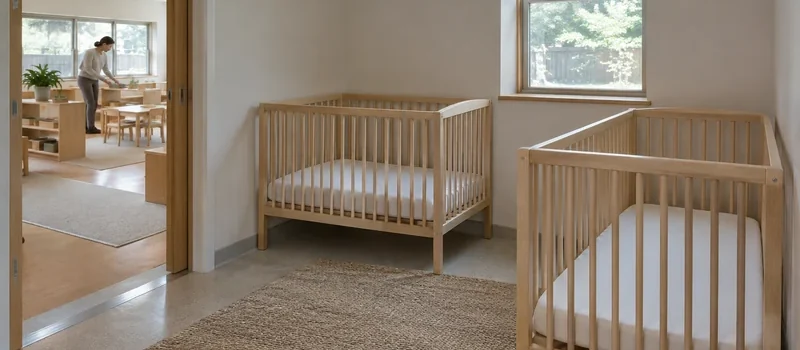
Your sleeping area should be quiet, comfortable, and easy for caregivers to supervise. Arrange individual approved sleep spaces with enough room for caregivers to access each infant safely. Keep this area away from busy activity zones where possible to reduce unnecessary disturbances.
Montessori floor beds are sometimes discussed in connection with Nido environments, but they should not be assumed suitable for every infant or childcare program. For babies under 12 months, follow applicable safe-sleep recommendations and use an approved sleep space with a firm, flat surface and a fitted sheet, without loose bedding or soft objects. Check local childcare regulations before choosing sleep furniture. Montessori principles do not replace safe-sleep requirements.
Feeding Area: Support Comfortable and Respectful Mealtimes
Provide a stable place where a caregiver can hold and feed an infant comfortably, with clean supplies within reach. Check whether a rocking or gliding chair has moving parts that could affect children on the floor, and whether the caregiver can see the main awake area from the chair. Feeding is an interaction, so the adult needs room to respond to the baby without reaching across clutter or leaving to fetch a cloth.
Older infants who are developmentally ready for seated meals may use an appropriate chair and table with adult support. You do not need a full table set in a room used mainly by non-mobile babies. Position the feeding area where staff can assist, clean spills, and manage used dishes without crossing the diapering route. Store labeled bottles and feeding supplies according to your program’s food-safety procedures, separately from changing supplies.
Diapering and Care Area: Organize Daily Care Efficiently
Diaper changes are part of everyday infant care, so this area needs to be practical and easy to maintain. A suitable changing table, accessible handwashing facilities, and organized storage for diapers, wipes, and spare clothes help caregivers manage routines efficiently.
Keep frequently used supplies within the caregiver’s reach, but store cleaning products and other hazardous materials securely away from infants. Choose surfaces that are easy to clean and follow your program’s hygiene procedures. Never leave an infant unattended on an elevated changing table.
Sensory Exploration Area: Support Early Discovery
Sensory exploration does not require a crowded corner filled with specialized equipment. A small, supervised part of the awake floor can offer a simple visual mobile, a safe grasping object, a textured material, or an object that makes a gentle sound. Choose items according to the infant’s current abilities and make sure they can be seen and reached safely. For very young babies, a caregiver’s voice and face are also part of this environment.
Keep the selection small and change it in response to what you observe. Too many toys can make it harder to notice what interests a child and to separate items that have been mouthed. Check each object’s age suitability, accessible components, cleaning method, and placement. If the sensory area shares movement space, arrange materials without blocking crawling routes or hiding an infant from view.
What Furniture Do You Need for a Montessori Nido Environment?
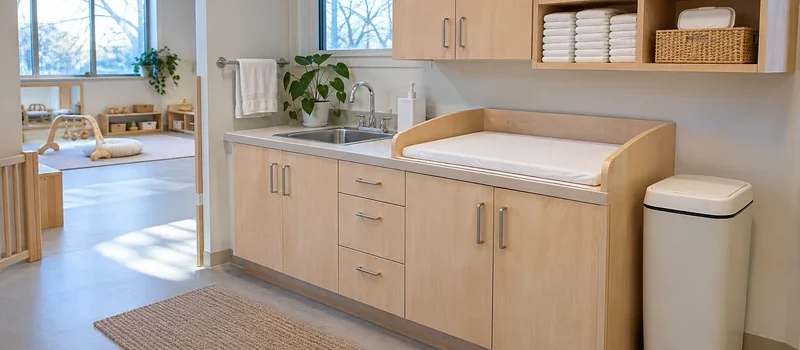
When choosing furniture for your Montessori Nido, focus on the items that support daily care, movement, and exploration. You do not need to fill the room with equipment. Start with the essentials and choose pieces that are safe, practical, and suitable for infants’ developmental stages.
- Infant Cribs: Provide individual, approved sleep spaces with firm mattresses and suitable bedding arrangements that meet local safe-sleep requirements.
- Changing Tables: Choose stable changing tables with easy-to-clean surfaces and convenient storage for diapers, wipes, and spare clothes.
- Low Shelves and Storage Units: Use accessible, stable shelves to organize toys and sensory materials while keeping the room tidy.
- Infant Tables and Chairs: Introduce appropriately sized furniture when babies are developmentally ready for supported sitting and early feeding activities.
- Movement Equipment: Consider securely installed mirrors and pull-up bars to support body awareness and early movement.
- Feeding and Caregiver Seating: Provide suitable infant feeding chairs and comfortable adult seating for daily feeding and caregiving routines.
Before purchasing, check the furniture dimensions, materials, stability, cleaning requirements, and applicable safety standards. Most importantly, make sure each piece fits your room layout and serves a practical purpose.
How Do You Select Montessori Materials for a Nido Environment?
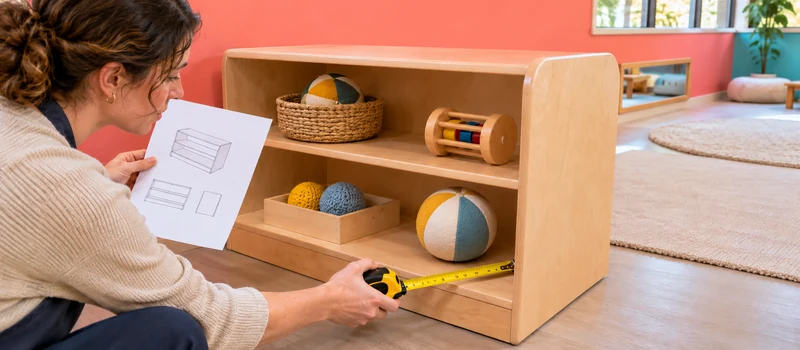
Choosing Montessori materials for your Nido environment does not mean buying as many educational toys as possible. Focus on materials that match infants’ developmental stages and give them opportunities to explore through everyday activities. Start with a small selection and introduce new items as babies develop new skills.
- Visual Materials: Use unbreakable mirrors, high-contrast images, and simple visual objects to encourage babies to observe and focus.
- Grasping Materials: Offer easy-to-hold wooden rings, soft grasping toys, and lightweight objects that help infants practice reaching and holding.
- Sensory Materials: Introduce different safe textures, fabrics, and materials to help babies explore through touch and other senses.
- Movement Materials: Use age-appropriate floor mats, securely installed mirrors, and suitable movement equipment to encourage rolling, crawling, and reaching.
- Cause-and-Effect Materials: Provide simple objects that respond to babies’ actions, such as safe rattles or activity toys that produce gentle sounds.
When selecting materials, pay attention to size, weight, construction, and cleaning requirements. Avoid small detachable parts, sharp edges, loose components, and materials that could create choking hazards. For infants under three, toys should meet applicable requirements such as ASTM F963 toy safety standards in the United States.
You should also avoid introducing too many materials at once. Observe what infants enjoy exploring, replace items when they become damaged, and adjust your selection as their abilities change. The goal is to give babies meaningful opportunities to discover something new without overwhelming them.
What Safety Requirements Should You Consider for a Montessori Nido Environment?

Safety should be a priority when preparing a Montessori Nido environment. Infants spend much of their time moving, touching, and exploring their surroundings, so even small details can affect their well-being. Before opening your room, check the furniture, floor surfaces, sleep arrangements, and everyday materials to make sure they are suitable for the infants in your care.
- Furniture Stability: Choose sturdy furniture with smooth edges and stable structures. Secure shelves, mirrors, and other wall-mounted equipment properly to prevent tipping or falling.
- Safe Sleep Arrangements: Provide each infant with an approved sleep space and a firm, flat mattress. Follow local safe-sleep guidance and avoid loose bedding, pillows, and soft toys in infant sleep spaces. The American Academy of Pediatrics’ safe-sleep recommendations provide useful guidance for US childcare providers.
- Floor and Movement Safety: Keep floors clean, dry, and free from obstacles. Check movement equipment regularly and make sure infants have enough space to explore without encountering unstable furniture or unsafe surfaces.
- Toy and Material Safety: Select age-appropriate materials without small detachable parts, sharp edges, or loose components. Check applicable toy safety requirements, including ASTM F963 in the United States.
- Hygiene and Cleaning: Choose furniture with easy-to-clean surfaces and establish regular cleaning routines for toys, feeding equipment, changing stations, and frequently touched areas.
- Supervision and Accessibility: Arrange furniture so caregivers can maintain clear sightlines and reach infants easily. Keep emergency exits and essential pathways unobstructed.
You should also check the childcare licensing requirements in your location before purchasing furniture or finalizing your room layout. Requirements for infant sleep equipment, room capacity, supervision, and sanitation can vary between countries and regions. A Montessori Nido should encourage freedom of movement and exploration, but that freedom must always be supported by an environment designed around infant safety.
FAQs
1. What Should You Look for When Choosing a Montessori Nido Furniture Supplier?
Look for a supplier that can explain product dimensions, materials, finishes, safety information, and customization options clearly. It also helps if the supplier can review your floor plan and recommend furniture according to the room size, age groups, and daily routines. Ask for product details before placing an order so you can check whether the proposed items suit your program and local requirements.
2. How Often Should You Change Materials in a Montessori Nido?
There is no fixed schedule for changing every material. Observe how infants use the items you provide. You can keep materials that remain interesting and suitable, remove anything damaged or no longer appropriate, and introduce a new item when a baby is ready for a different experience. Rotate a small selection rather than changing everything at once.
3. How Do You Manage Different Infant Developmental Stages in One Nido Room?
Plan clear movement and care areas, then adjust the materials and level of access for each infant’s abilities. Keep younger or non-mobile babies away from objects and routes used by older, mobile infants, and make sure caregivers can supervise both groups. The arrangement should be reviewed regularly as children develop.
4. Is a Montessori Nido Environment Suitable for a Daycare Center?
Yes. A daycare center can create a Montessori Nido environment by preparing a dedicated infant space, choosing suitable furniture and materials, and organizing routines around each baby’s needs. The room must also meet local licensing requirements and allow caregivers to supervise infants and manage daily care safely.
Conclusion
A well-planned Montessori Nido environment supports infants’ movement, exploration, and daily care. Choosing the right furniture and layout makes the room safer and more practical. Preschool Furniture Supplier can help you plan functional spaces and select suitable furniture for your needs.